

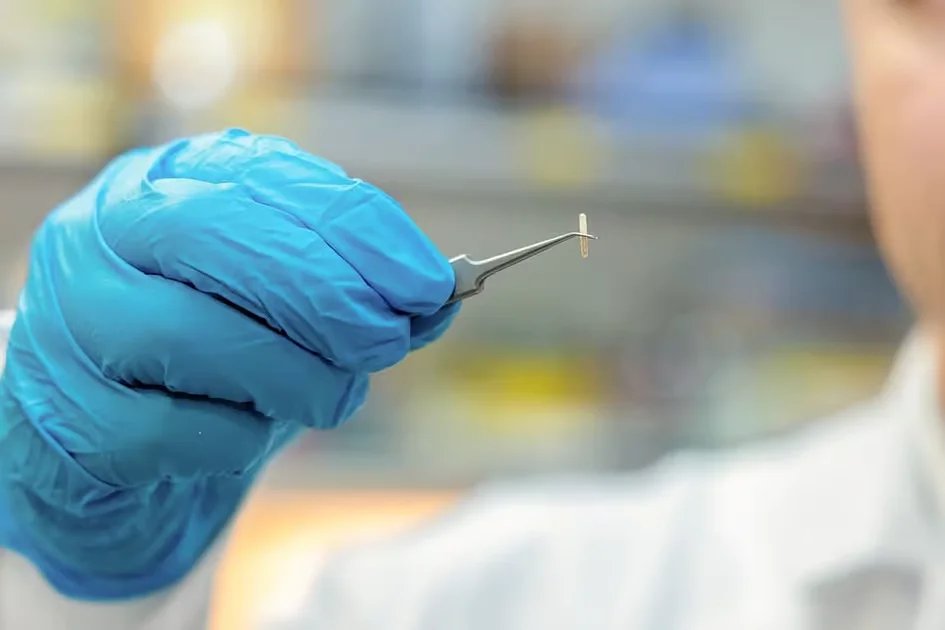
A device the size of a small seed can now be injected into the body with a standard needle, sit near a nerve, and run on no battery at all.
Researchers at NYU Abu Dhabi, working with Cleveland Clinic, developed the wireless implant as part of a study published in the journal Science Advances. Once placed near a target nerve, the device sends controlled electrical signals that influence how the nerve communicates with the body, a process called neuromodulation. It is powered wirelessly from outside the body. Doctors, or eventually patients themselves, could adjust its activity in real time depending on how a condition responds.
The gap the device targets is practical. Devices that already do this job, such as spinal cord stimulators, typically require surgery to place wires near the spine and a separate incision, often in the back or abdomen, to implant a battery pack. Patients usually need four to six weeks after surgery for the body to heal around the leads and generator. The battery typically lasts several years before needing replacement through another procedure. The new device is designed to remove the incision, leads, and battery from that process entirely.
Stay up to date with the latest news. Follow KT on WhatsApp Channels.
“This work represents a shift in how we think about treating nerve-related conditions,” said Prof Khalil Ramadi, Assistant Professor of Bioengineering at NYU Abu Dhabi and NYU Tandon “By creating a device that can be injected rather than surgically implanted, we are making these therapies simpler, safer, and more accessible, while still maintaining precise control over nerve activity.”
The device can also be tracked using standard imaging tools such as ultrasound and CT scans. This lets doctors confirm its position and monitor it once inside the body, something existing implants cannot offer in the same way.
The research is still at the laboratory and preclinical stage. In testing, the device showed precise control over nerve stimulation and consistent performance under realistic conditions. It successfully activated nerves in living tissue, which researchers say points to its potential for real-world use. It has not been tested in humans and is not yet available as a treatment.
“This technology has the potential to bridge the gap between non-invasive therapies and traditional implants,” said Dr Mohamed Elsherif, Research Associate at NYU Abu Dhabi and first author of the study. “It opens the door to treatments that are both effective and easy to deliver, which could significantly improve patient care.”
Dr Sawsan Abdel-Razig, Chief Academic Officer at Cleveland Clinic Abu Dhabi, said the project reflects the value of pairing clinical expertise with engineering research, and that partnerships of this kind are what allow safer, less invasive therapies to move from early-stage science toward eventual patient use.
The condition the device targets is widespread, well beyond the UAE. According to the International Association for the Study of Pain, low back pain alone affects an estimated 30 to 40 per cent of adults at any given time. This category of chronic pain is what neuromodulation devices are designed to treat. That demand is reflected in the global market for these devices, which, according to a Fortune Business Insights report, was valued at around $7.25 billion in 2026. It is projected to nearly double to $13.78 billion by 2034, with growth largely driven by demand for less invasive alternatives to current implants.
If the device were to move through further testing, human trials, and regulatory approval, it is expected to reduce the need for major procedures for treating chronic pain and movement disorders.
Source: Khaleej Times