

ABU DHABI, 25th November, 2026 (WAM) — NYU Abu Dhabi has received a grant from the US Department of State to lead Lunar Scouts, a new US–UAE programme that began this month and will run for 18 months. The programme will train 30 graduate students to develop and test scientific instruments for future lunar missions.
Combining hands-on engineering with access to lunar research and testing facilities, the programme will help advance the development of technologies to identify and catalogue natural resources on the lunar surface and support future exploration.
Lunar Scouts will bring together 15 graduate students from American institutions and 15 from UAE institutions to work in six binational teams.
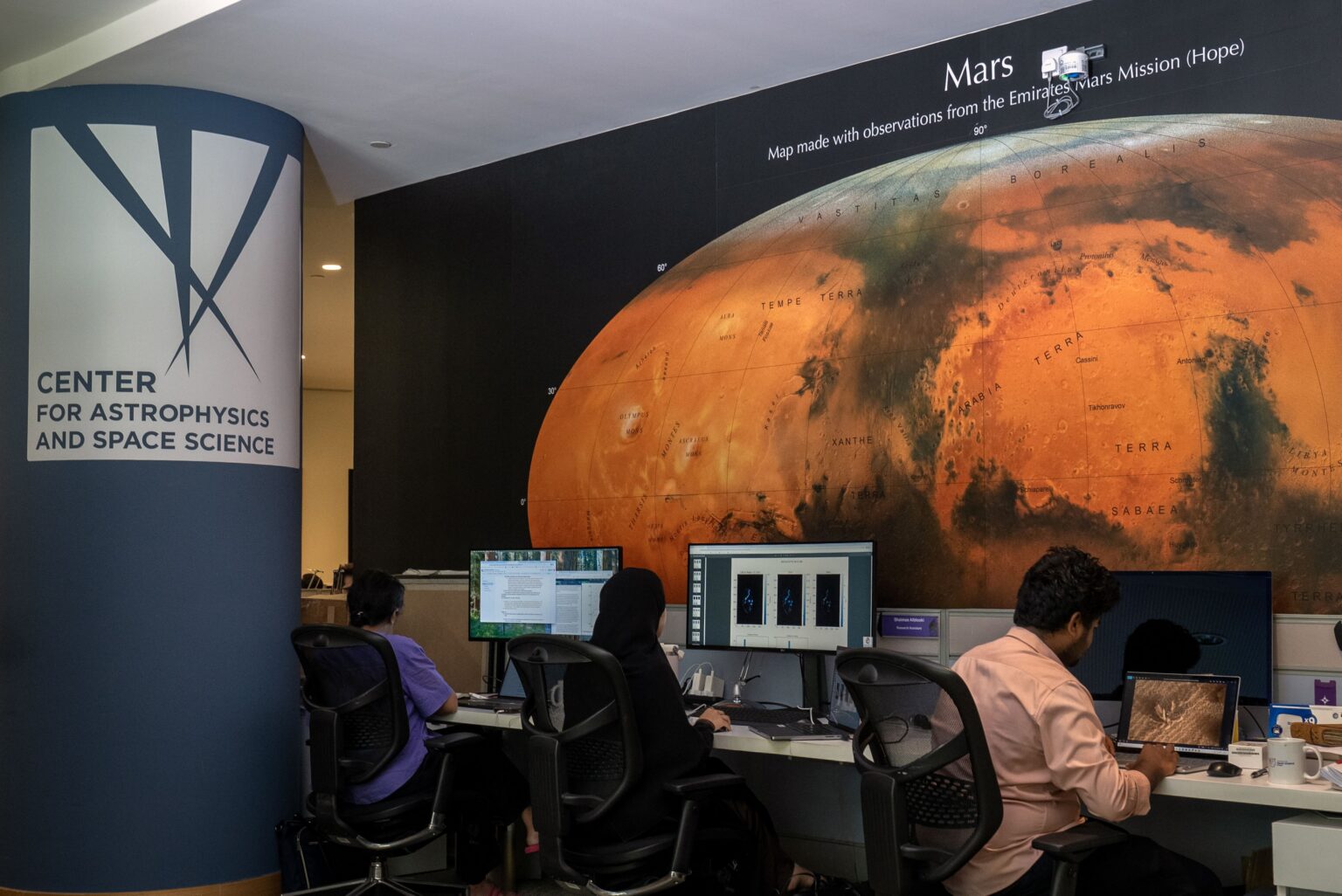
The programme is led by Dimitra Atri, Principal Investigator of NYU Abu Dhabi’s Space Exploration Laboratory within the Centre for Astrophysics and Space Science (CASS). Each team will design and build a scientific payload to be integrated with a rover chassis designed by NYU Abu Dhabi.
The teams with the best designs will have the opportunity to visit a NASA centre and a commercial lunar exploration company, gaining exposure to organisations working at the forefront of space exploration.
Teams will progress from initial designs to calibrated prototypes, testing their instruments in laboratory conditions and simulated space environments. A two-week field campaign at NYU Abu Dhabi’s Saadiyat Moon Station lunar testbed will allow teams to evaluate their instruments using the Emirates Lunar Simulant.
Atri said, “Lunar Scouts builds on capabilities we have developed at NYU Abu Dhabi to support lunar exploration. Our Emirates Lunar Simulant, made using rocks found in the UAE, reproduces important properties of lunar soil, while our Space and Planetary Environment simulAtoR (SPEAR) allows us to test technology under simulated space conditions.
“These facilities provide a practical foundation for students to develop and evaluate instruments while working across borders and disciplines on challenges relevant to future lunar missions.”
The programme aims to produce six tested scientific payloads, with up to three advanced to the preliminary design stage for future lunar missions or mission support.
Students will also generate scientific datasets and engineering documentation, alongside an open-source challenge package that can support future student cohorts and mission studies.
Source: Emirates News Agency