

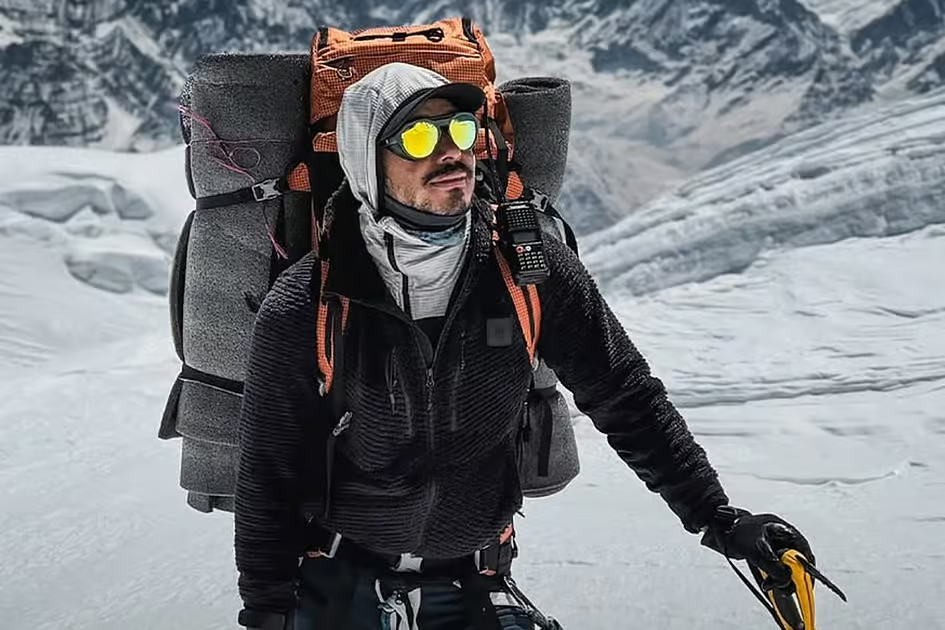
The deadly Broad Peak avalanche that claimed the lives of several mountaineers, including British-Nepali climber Nirmal Purja, has sparked a debate within the mountaineering community after Dubai-based Egyptian climber Manal Rostom posted her thoughts on social media asking why it took nearly 24 hours for rescue teams to reach the site.
In an Instagram post, Rostom compared the reported timeline of the avalanche and the arrival of rescuers, asking: “Is anyone going to talk about how fast rescue on Broad Peak arrived?” She noted the avalanche occurred at around 9am on July 30, while rescue teams reached the site around 8am the following day, before ending the post with a single question: “Why?”
In the accompanying caption, Rostom stressed that she was asking out of concern for the future of mountaineering rather than to assign blame.
“I never climbed in Pakistan and don’t intend to, as I’m not pursuing the 8,000m peak challenge,” she wrote, explaining that Everest is the only mountain above 8,000 metres she has climbed.
She questioned why climbers carrying avalanche transceivers and Garmin tracking devices could not be located sooner.
“If we’re going to continue climbing those mountains, and ‘risk our lives’ as people keep saying, we need to be having this conversation as soon as possible,” she wrote, adding that if she were ever to die in similar circumstances, she would want people to ask the same questions “to ensure this doesn’t ever happen again”.
‘I’m asking a pure mountaineering question’
Speaking to Khaleej Times, Rostom said the reaction to her post had surprised her, with many assuming she was criticising Pakistan’s rescue authorities.
“I’m asking a pure mountaineering question.”
Rostom, who is pursuing the Seven Summits challenge and became the first Egyptian woman to summit Mount Everest, said she felt qualified to raise questions because of her years of climbing experience. “I feel like I deserve to ask questions, even if I haven’t climbed in Pakistan,” she said.
She explained that the tragedy had prompted friends and family to urge her to stop mountaineering altogether. “I understand it’s difficult terrain. I understand the infrastructure is limited. So why do we continue sending people to these mountains if they’re so dangerous like this?”
Rostom said her concern was protecting the sport’s future rather than discouraging people from climbing. “If we’re telling younger generations that mountains kill and you may or may not die, then we need to understand exactly what happened.”
Addressing criticism that she had spoken too soon after the tragedy, Rostom said: “Because I respect the families, I’m actually raising that question.”
Fellow climbers push back
Her post quickly sparked debate among mountaineers, with several arguing that the realities of high-altitude rescue in Pakistan’s Karakoram range make comparisons with other mountains difficult.
According to the Pakistan Alpine Club, the search and rescue operation has been led by renowned Nepali mountaineer Mingma Gyalje Sherpa alongside Pakistani authorities.
Drone footage later spotted seven climbers on the mountain, although officials said their identities and conditions could only be confirmed once ground teams reached them. The operation also involved the Pakistan Army and support from several expedition teams that suspended their own summit attempts to assist rescuers.
Throughout the operation, rescue officials repeatedly urged the public not to speculate or declare climbers dead until teams had physically reached those located on the mountain.
With inputs from Anamika Chatterjee
Source: Khaleej Times