

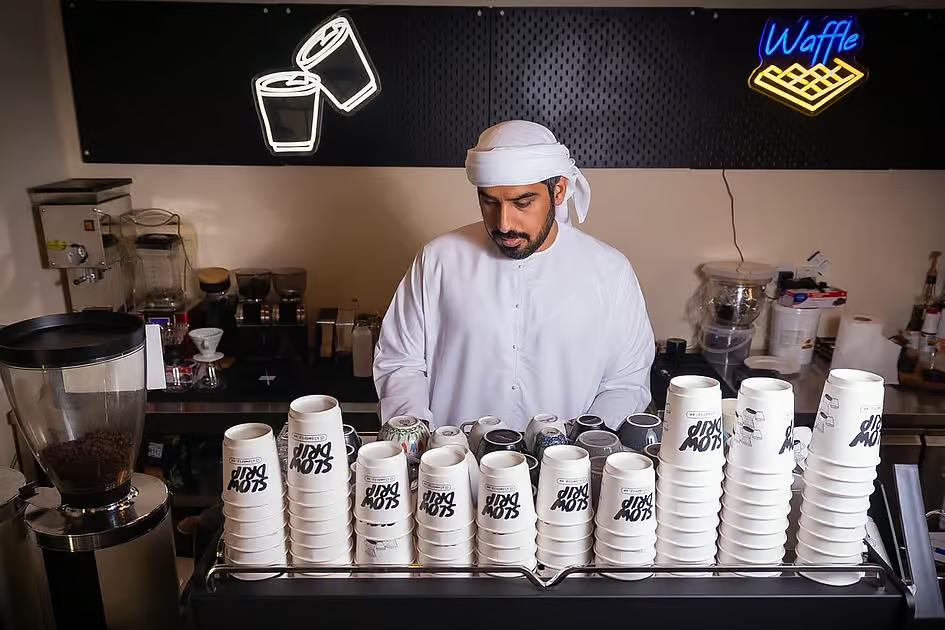
For nearly a decade, Obaid Ateeq Alkaabi dreamed of opening a coffee business. One harsh review almost made him give up on that dream for good.
Coffee had always been part of his life. Growing up, he watched his family roast and prepare Emirati coffee at home, where serving guests was about far more than the drink itself.
“My family used to roast and prepare Emirati coffee in front of us, and I grew up loving it.”
His fascination deepened in 2015 after visiting a roastery that was experimenting with specialty coffee beans while preserving the traditions of Emirati coffee. The concept captivated him, and over the following years, he visited roasteries, attended training sessions, and immersed himself in the world of coffee.
Stay up to date with the latest news. Follow KT on WhatsApp Channels.
“I simply wanted to learn.”
His first attempt to turn that passion into a business came in 2017, when he began roasting and selling Emirati coffee beans. Initially, customers responded well, but one harsh comment changed everything.
“One person told me, ‘Your coffee is not drinkable. Even if it cost two dirhams, I would not buy it.’ I could not sleep that night. The next day, I changed everything: the bean, the supplier, and the roasting profile. After I made all those changes, my sales dropped.”
Eventually, he abandoned the project altogether. Looking back, he believed the mistake was allowing one opinion to outweigh the experiences of everyone who had enjoyed his coffee.
“Today, if someone says my coffee is not good, I respond differently. Coffee is a matter of taste. One opinion should not make you abandon everything.”
Although the business ended, his passion for coffee never did.
After marrying in 2021, Obaid used part of his UAE marriage grant to buy professional coffee equipment. He practiced at home, refined recipes, and continued sharing his coffee routine on social media.
But despite years of preparation, he still hesitated to open a café after watching many businesses struggle under the pressure of rent, salaries and operating costs.
During that period, friends and guests who visited his majlis regularly encouraged him to turn his passion into a business.
“Again and again, they told me, ‘Why do you not open? It is a shame not to. Your coffee is excellent.’”
Everything changed after the birth of their first child, when his wife developed partial paralysis and travelled to the United States for treatment. She remained for several months; Obaid joined her, expecting their time to revolve around hospitals and rehabilitation.
Instead, the couple quietly began planning the business they had spoken about for years. Between hospital visits, they visited cafés, refined the concept behind Slow Drip, developed its visual identity, and completed the licensing process before returning to the UAE.
“She kept telling me, ‘Obaid, why do you not start, even if you begin from home? The opportunity is available now, and God will make the rest easier.’”
When they returned to the UAE in 2024, Slow Drip began operating from an outdoor area connected to their home.
Within a week of opening, Obaid received a call inviting him to pitch the concept through an initiative linked to the Ministry of Community Empowerment. The opportunity led to Slow Drip securing a place at Global Village.
This introduced Slow Drip to thousands of visitors and marked the beginning of its next chapter.
Visitors were drawn not only to the coffee but also to the experience. Rather than remaining behind the counter, Obaid worked alongside his team, speaking with customers about Emirati coffee, Emirati hospitality and the traditions that had inspired Slow Drip from the beginning.
Soon afterwards, he placed second in the Emirati Coffee Championship organised by the Department of Culture and Tourism Abu Dhabi. The recognition opened opportunities beyond the café itself.
Government entities invited him to deliver workshops, and he later represented Emirati coffee culture both in the UAE and abroad, including at an event in China.
For Obaid, those opportunities are about preserving culture as much as serving coffee.
“What I teach is not only coffee,” he says. “I teach Emirati etiquette, traditions, hospitality, generosity and respect. These values should be planted in the hearts of our children.”
Beyond serving coffee, Slow Drip also became a place where aspiring entrepreneurs sought advice.
“Honestly, my original goal was not simply to sell. I wanted to practice, learn and build the concept properly.”
“Many viewers wanted to learn about coffee, and many others wanted to start home businesses. Because I was operating from home, they saw me as an example of how a small project could begin.”
Questions ranged from suppliers and equipment to licensing and staffing. Obaid answered as many as he could, believing he was simply continuing the generosity that other Emirati coffee professionals had shown him when he was learning.
“Many Emirati roastery owners told me, ‘Come, learn and ask for whatever you need. We will help you.’ The coffee community among Emirati business owners is very supportive. People help one another.”
That philosophy continues to shape the way he runs Slow Drip today.
“I believe strongly that provision comes from Allah. I believe in what I offer, so I am not afraid to help. I even share the suppliers I work with. Of course, there are some private things a business cannot share with everyone. I can teach someone the fundamentals without giving away every private formula.”
One of the biggest turning points for the business came after Emirati content creator Ahmed Saif Al Qubaisi visited the home café after watching one of Obaid’s live broadcasts.
Before then, Obaid believed consistently posting videos and going live on social media would be enough to grow the business.
“His visit opened my eyes to how a business should be marketed.”
The video introduced Slow Drip to a much wider audience, with customers waiting up to 40 minutes, forcing him to quickly hire experienced staff to maintain the quality he had spent years developing.
Today, Slow Drip is preparing to open its first permanent café in Baniyas, Abu Dhabi. His ambition extends well beyond a single location.
“I want specialized Belgian-waffle kiosks and Slow Drip coffee points in malls across the UAE. I want the brand to become widely accessible.”
For Obaid, however, the business is about more than expansion.
“What began as a story about home businesses became something broader. We do not only sell coffee; we also try to support people who want to learn and build something of their own.”x
Source: Khaleej Times