

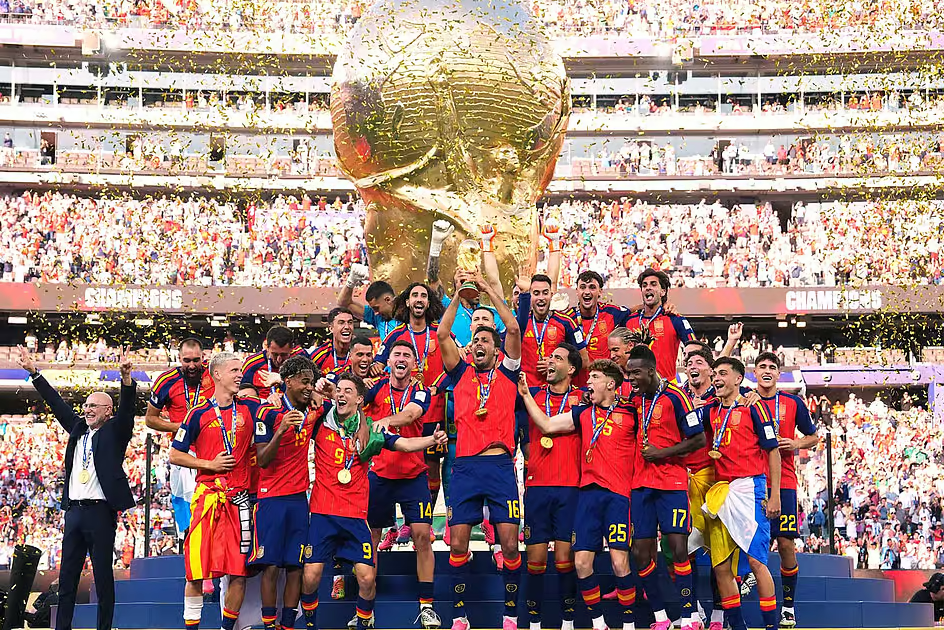
Spain may have lifted the FIFA World Cup trophy, but the United States could end up claiming a share of the champions’ prize money.
The 2026 FIFA World Cup winners earned $50 million from FIFA. Because the tournament was co-hosted by the United States, income generated from matches played on American soil is generally subject to U.S. taxation.
Spain is far from the only team affected. Every national team that played matches in the U.S., whether it won the title or exited in the group stage, is expected to face some level of U.S. tax liability on tournament-related earnings.
Stay up to date with the latest news. Follow KT on WhatsApp Channels.
The issue extends well beyond the prize money awarded to national federations. Players, coaches, support staff and referees who earned income while working in the U.S. during the tournament may also owe U.S. taxes.
In addition, commercial income such as sponsorship deals, appearance fees and endorsement payments linked to World Cup activities could also fall under U.S. tax rules, depending on where that income was generated.
While the IRS generally withholds up to 30% on certain payments made to nonresident foreign athletes, the final amount owed is not always straightforward.
The actual tax burden can vary depending on tax treaties between the United States and a player’s home country, how FIFA distributes prize money to national federations, and whether players receive additional performance bonuses.
Unlike previous World Cups in countries such as Qatar, Brazil and Russia, where host governments granted broad tax exemptions related to the tournament, the United States largely maintained its standard tax framework for foreign athletes and teams, adding another layer of complexity to the global event.
The potential tax burden has also drawn criticism from both Republican and Democratic lawmakers.
“I think it’s a rip-off,” Rep. Tim Burchett, R-Tenn., told Fox News Digital.
“I’m not a fan of it, but Americans have to do it. American professional athletes do it, so they knew that when they came over here.”
Burchett argued that taxing international athletes sends the wrong message as the U.S. prepares to host more major sporting events.
“We want to encourage these people to come over here and spend their money, and then we take a big chunk of it. We’ve got to get a better tax system.”
Source: Khaleej Times