

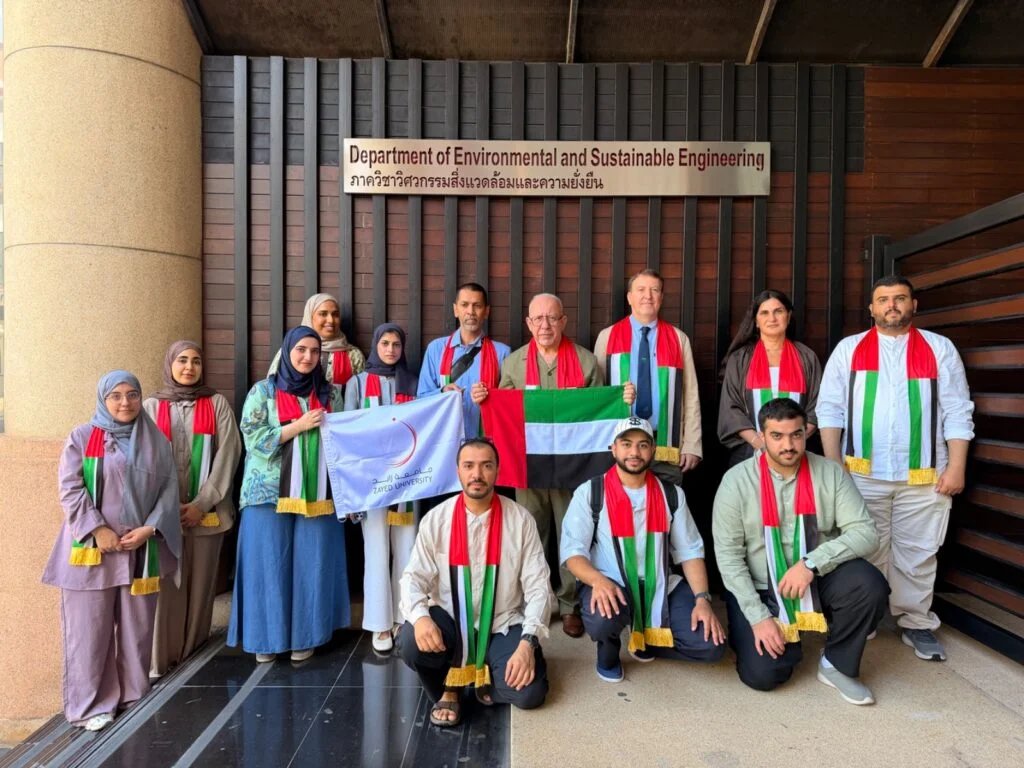
ABU DHABI, 22nd June, 2026 (WAM) — Zayed University students have completed an intensive sustainability field research programme in Thailand.
The visit formed part of Zayed University’s wider commitment to experiential learning, international academic collaboration and the preparation of specialised talent capable of contributing to the vision outlined in “We the UAE 2031” and the country’s transition towards a more sustainable future.
The programme brought together students from the Master of Science in Environmental Sciences and Sustainability for a series of academic and field-based activities across Bangkok and Krabi.
In Bangkok, students visited Chulalongkorn University, one of Thailand’s leading higher education institutions, where they toured laboratory facilities and participated in research sessions with Thai students and researchers. The group also visited the Belt and Road Research Centre at the Asian Institute of Technology, strengthening academic collaboration in environmental and sustainability research.
Students then conducted an integrated field project in central Bangkok, examining air quality, noise pollution and the sustainability of urban transport systems. The project enabled them to apply scientific analytical tools in a complex urban environment and consider how major cities can respond to climate, infrastructure and environmental pressures.
During the programme, Professor James Terry delivered a specialised lecture titled “Reassessing Major Historical Flood Events in Bangkok to Better Understand Future Coastal Flood Risks”. The session explored the implications of climate change for coastal cities and the importance of strengthening resilience and preparedness.
The programme continued in Krabi Province, where students studied coastal and marine ecosystems. Fieldwork included activities on Ko Poda Island, located within a marine national park, where students examined coastal geological formations and considered the potential impact of sea-level rise on vulnerable coastal environments. The group also visited a wildlife sanctuary to learn more about biodiversity conservation and habitat protection.
The expedition concluded with student presentations outlining their research findings, recommendations and key lessons from the programme. The experience strengthened students’ ability to connect academic knowledge with practical application and propose evidence-based solutions.
Source: Emirates News Agency